
A US bank account is the quiet workhorse of a foreign investor’s real estate plan — rent lands in it, the mortgage drafts from it, and lenders read its statements as proof the file is real. You can buy your first Florida rental without a US credit score, but you cannot run it well without US banking. Opening the account early, ideally on the same trip you tour properties, makes every later step faster and cheaper.
Why a US bank account comes first
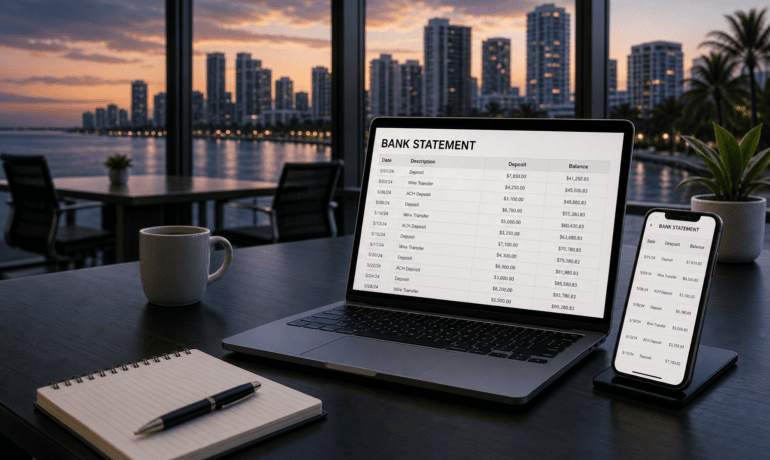
Foreign national lenders want to see closing funds and reserves — usually several months of payments — seasoned in a US bank account before the wire goes out. Property managers want a US account for rent deposits, and insurers, HOAs, and utilities want one for autopay. International wires work, but every transfer costs fees and days. A stateside account turns all of that friction into routine.
What banks ask from foreign applicants
Requirements vary by institution, but the core file is consistent: a valid passport, a second form of ID, proof of your home-country address, an opening deposit, and either an ITIN or a Form W-8BEN so the bank reports interest correctly. Most large banks still require one in-person visit, so investors usually open the account during a scouting trip. Some international banks with US operations let existing clients open stateside accounts from home — ask before you fly. Then let the money sit and season: those same statements later become part of your closing documents from abroad.
Building US credit from zero
A US credit score is optional for your first loan, but it lowers your costs on everything after it. The playbook is slow and boring — which is exactly why it works:
- Get an ITIN first: most credit products open to foreign applicants key off it — apply on Form W-7 weeks ahead.
- Start with a secured card: a deposit-backed card from the bank that already holds your account is the easiest yes.
- Automate every payment: on-time history is the heaviest factor in your score, per the CFPB’s credit guidance.
- Keep balances low and wait: six to twelve months of clean history usually produces a usable score; eighteen to twenty-four builds a strong one.
Your first loan does not wait for your score
Here is the part that surprises most investors: foreign national loans qualify the property, not your credit history. The lender underwrites the home’s rent against its full monthly payment — the DSCR — plus your down payment and reserves. No US score required. Run your numbers through our DSCR calculator: if the rent covers the payment, you can buy now and build credit in parallel.
A typical deal
An investor from Medellín opens a US bank account in February during a scouting trip, wires in $130,000, and adds a $1,000 secured card. In May she closes a $340,000 Kissimmee duplex with a foreign national DSCR loan — $3,100 in combined rent against a $2,550 full payment, a 1.22 DSCR, no US score involved. Rent flows into the account, the mortgage and insurance autopay from it, and the card cycles small charges monthly. Twenty months later she has a 720 score — and her second purchase prices with more options than her first.
Setting up your US footprint?
Alpha Equity Lending walks foreign investors through the whole sequence — account, ITIN, seasoning, loan — and finances the property while your credit is still catching up. Tell us about your plans through our submit your deal page — in English or Spanish.
By Andres Jara — Alpha Equity Lending (NMLS #1855083). 20+ years in real estate finance, an MS in Finance, and an active South Florida investor and landlord.
